16mm Film · RISD Film Practices · 2023
The Saver's Mask
A 16mm psychological chase film about desperation, restlessness, and the frightening speed of an inner life with nowhere to land.
Role
Director · Cinematographer · Editor
Year
2023
Format
16mm · Kodak Tri-X Reversal
Camera
Bolex
Course
RISD Film Practices
Guidance
Ramón Rivera-Moret · Carter (TA)
The Idea
A chase through the self
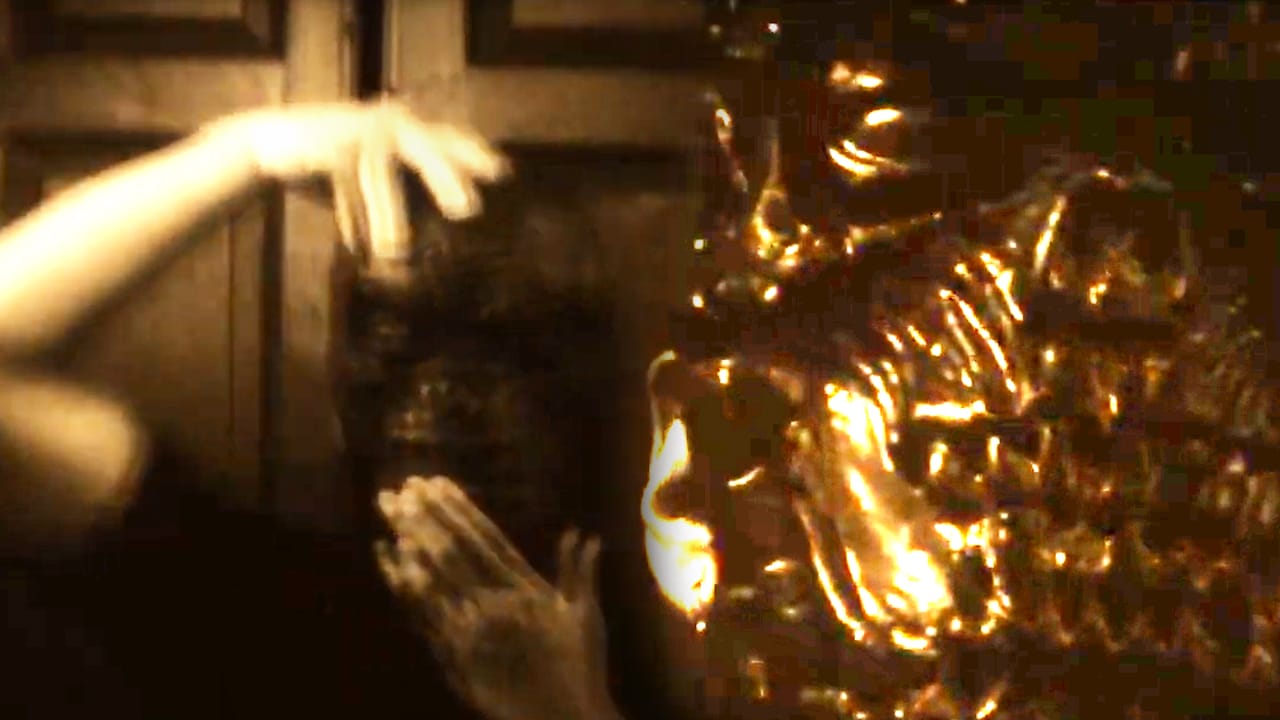
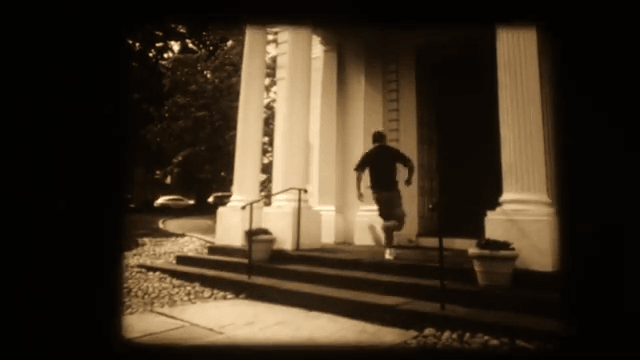
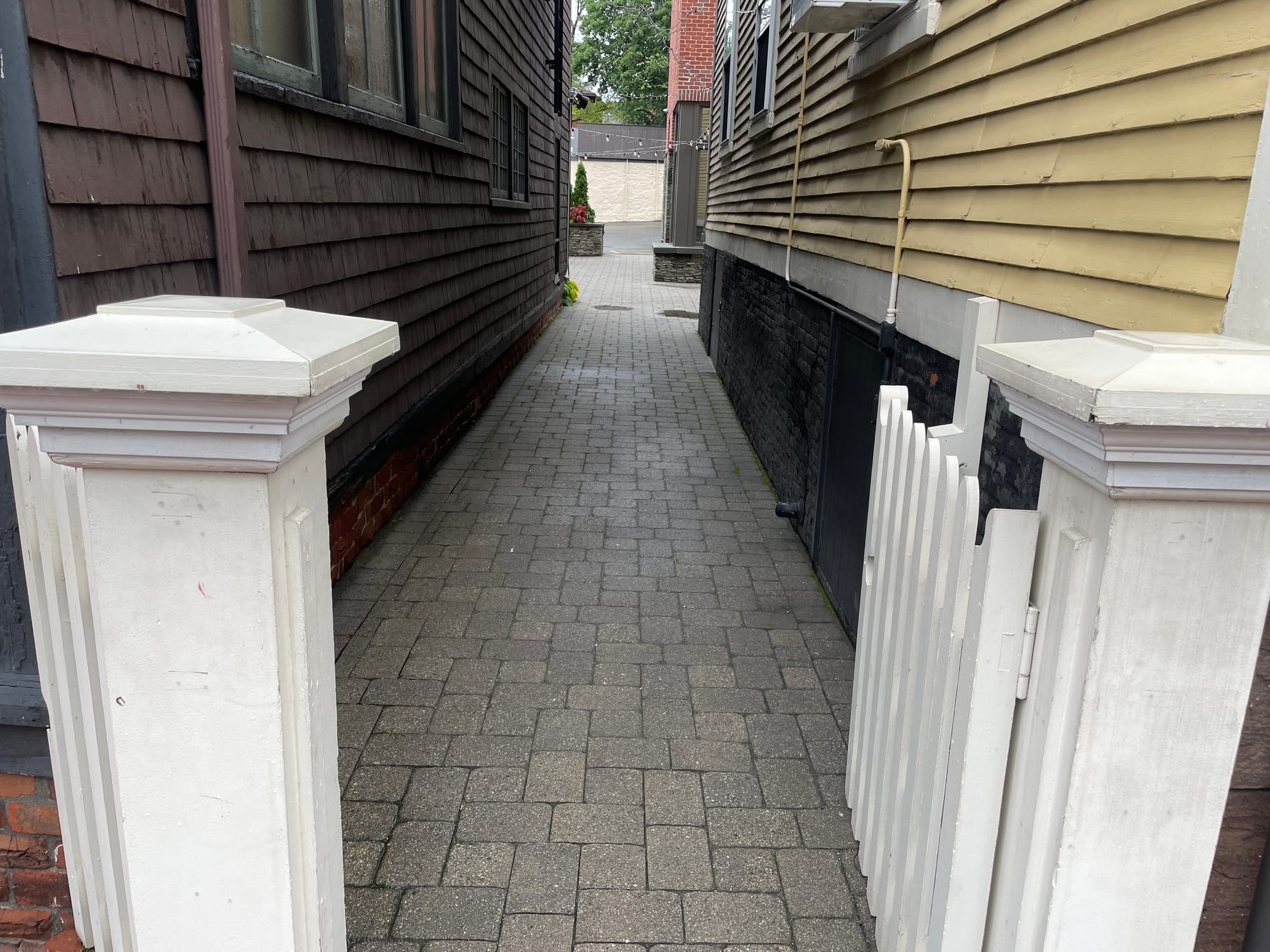
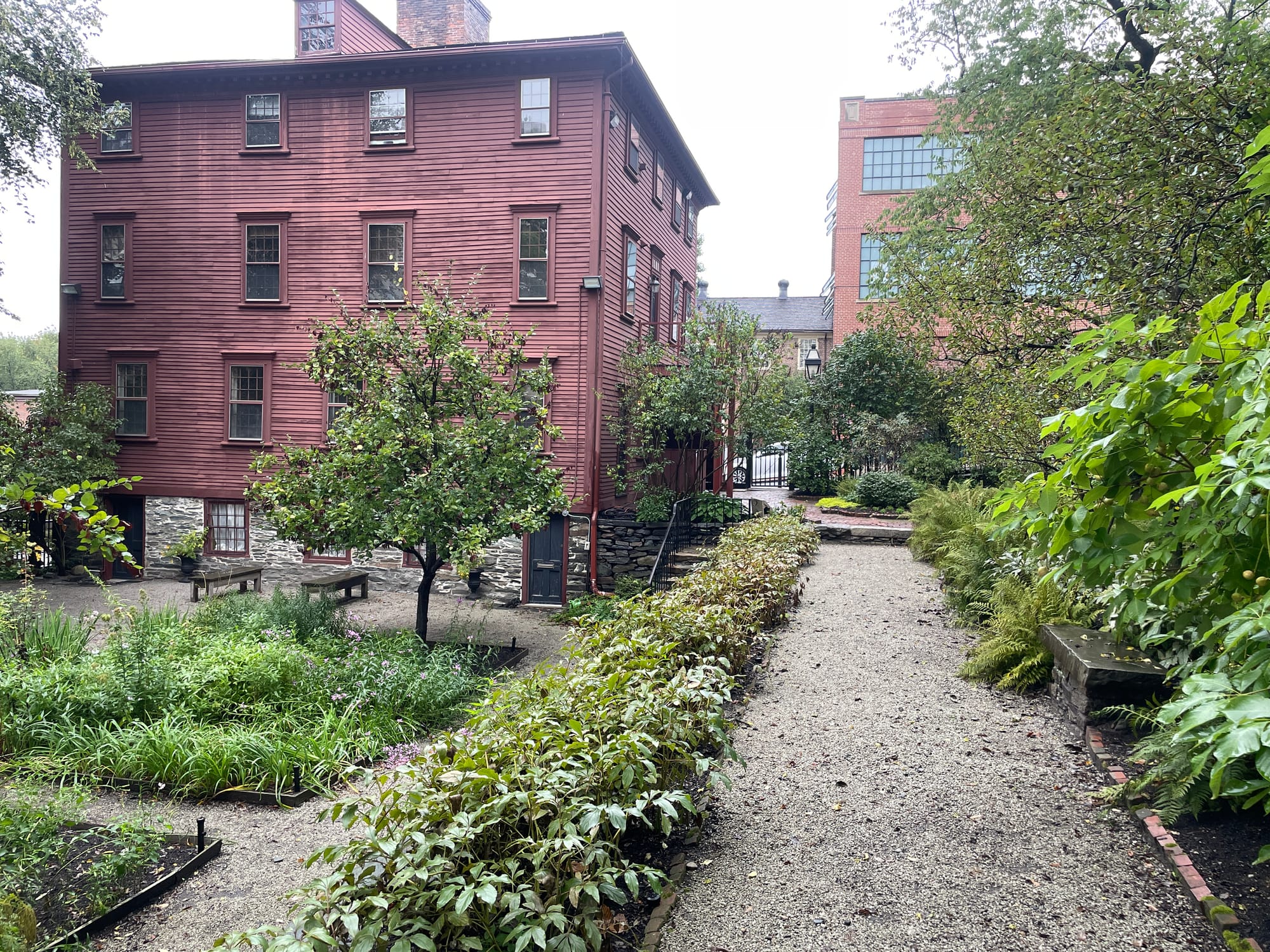
The Saver's Mask is a psychological chase film about desperation and the frightening speed of an inner life with nowhere to land. A man moves through Providence with manic, almost ritual urgency — running through a courtyard, stopping to touch the grass and bushes, cutting through an alleyway — until he reaches a church and receives the mask.
Bought from a Savers thrift store, the mask became the film’s central emblem: the villainous double inside the self, the evil twin we carry privately and meet only when tension becomes unbearable.
Process · Shooting 16mm
Every second was material
Shot on a Bolex on Kodak Tri-X reversal stock, this was my first serious encounter with analog filmmaking — learning to read light, trust the meter, protect the exposure, and compose within the hard limits of a finite roll. There was no overshooting and no digital forgiveness; every frame had to be a decision.
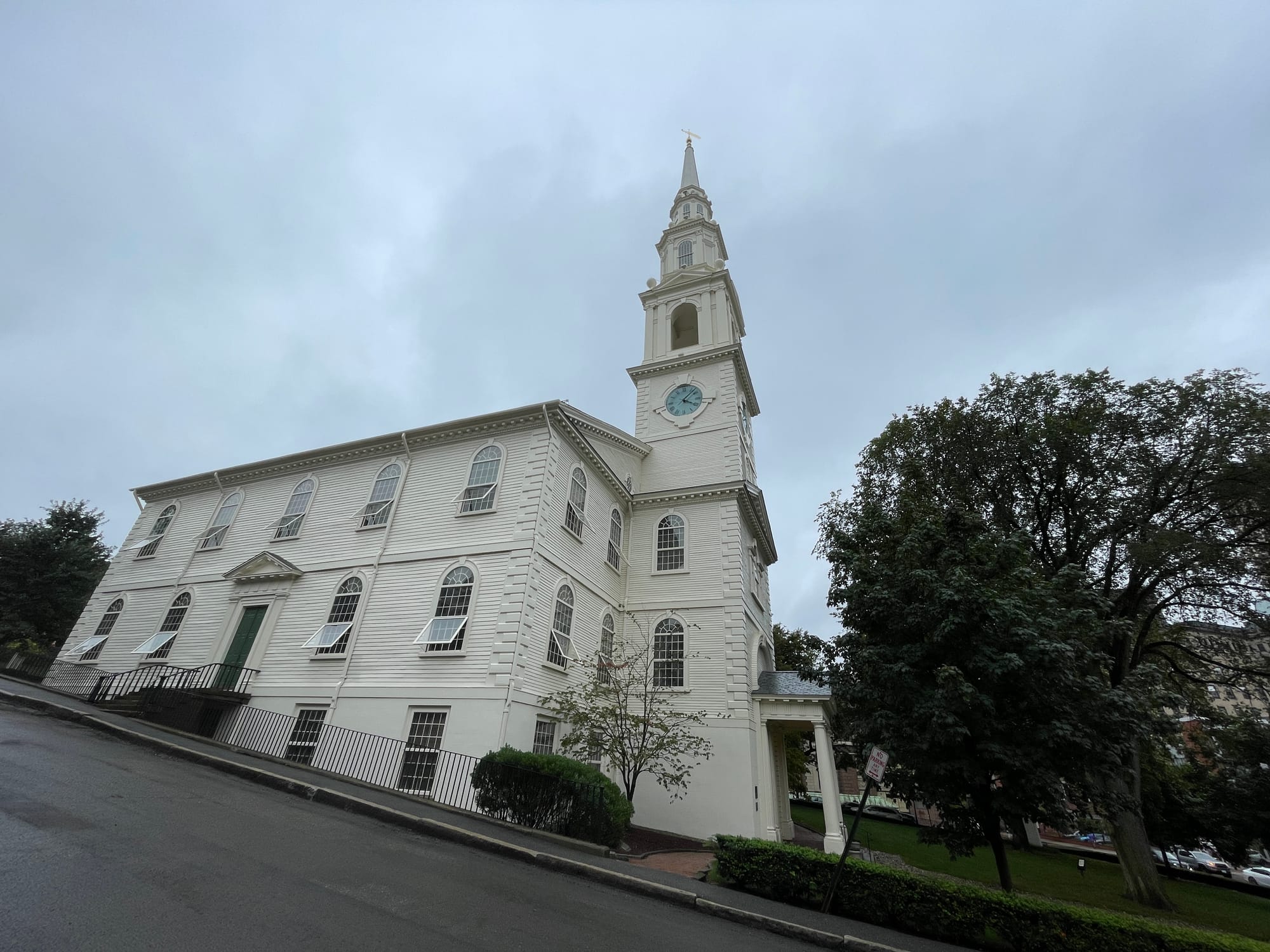
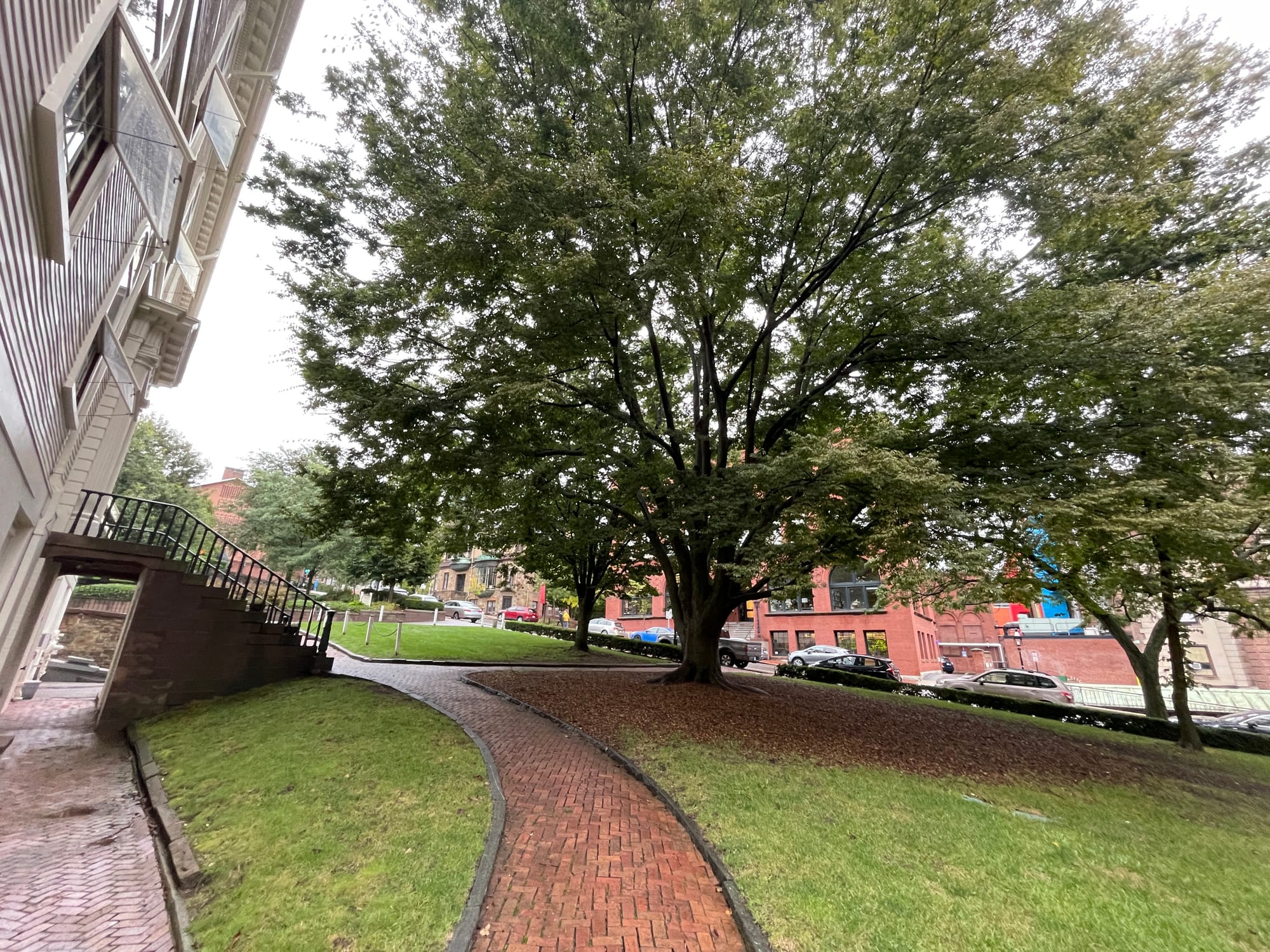
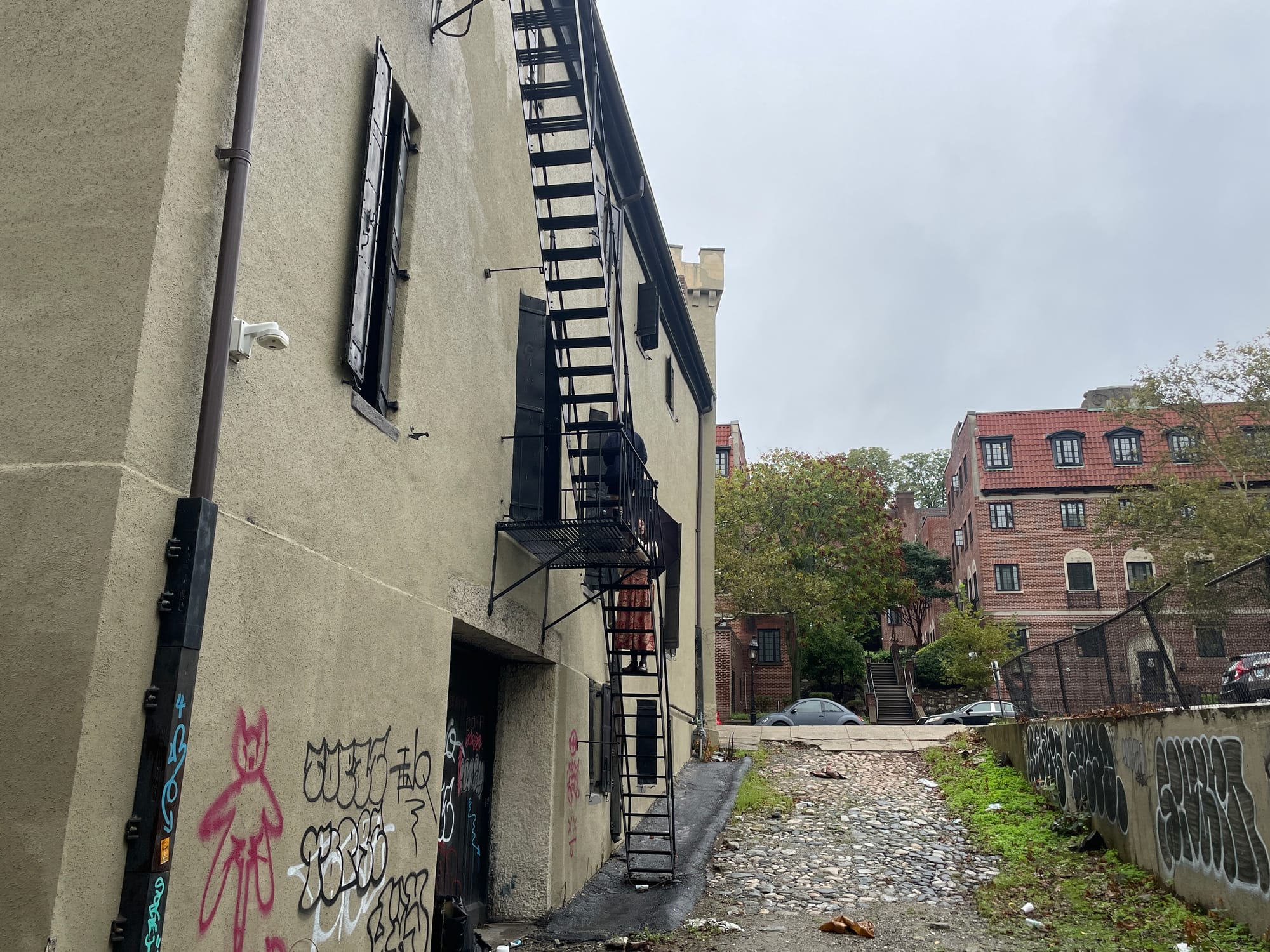
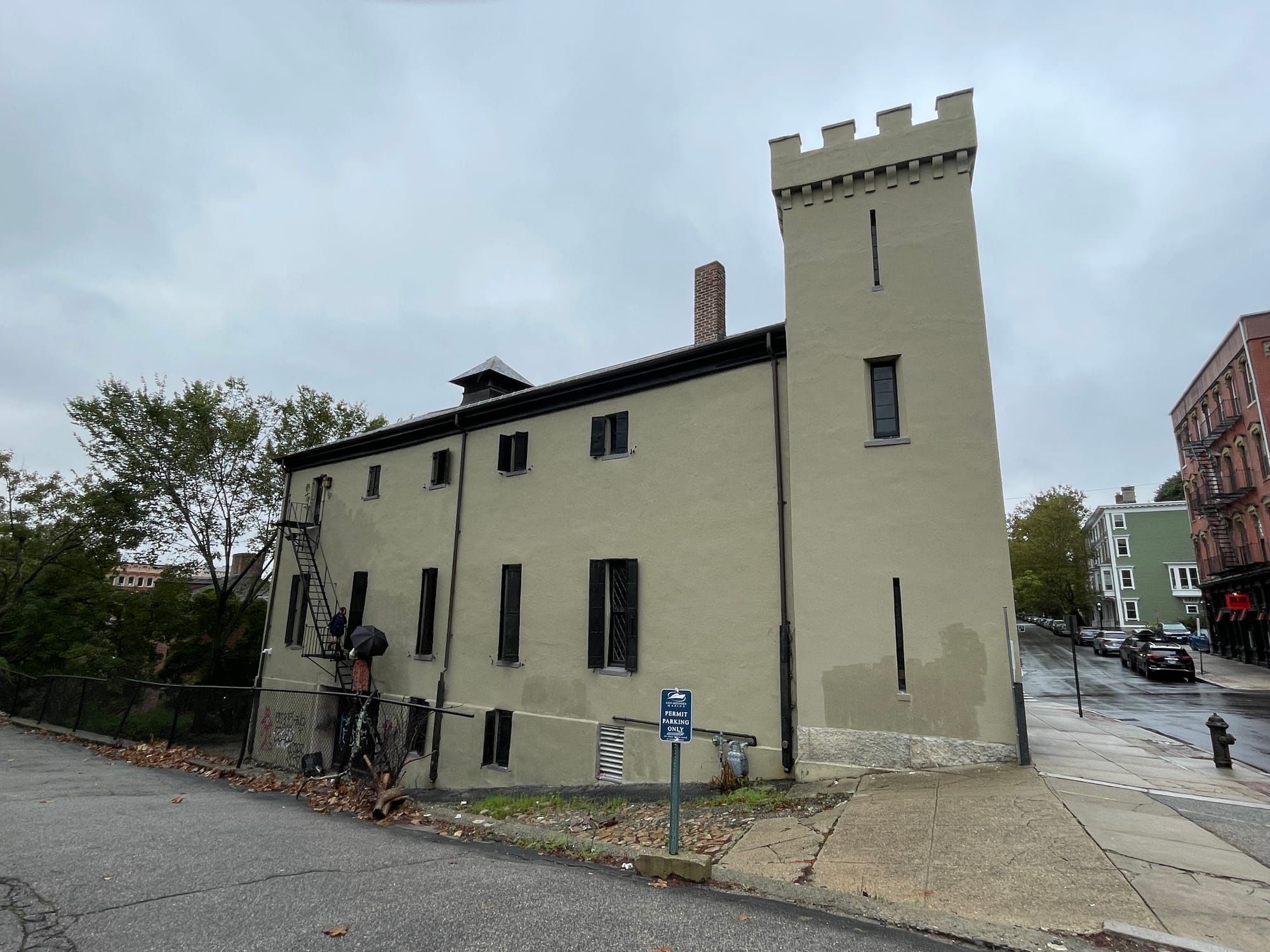
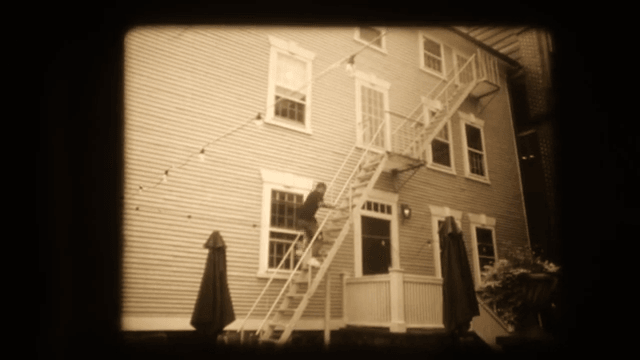
I scouted Providence for spaces that could double as the character’s mental state — courtyards, fire-escape alleyways, a castle-like tower, and finally the white-columned church. Each location became an emotional threshold, pulling him deeper into confrontation with himself.
The Emblem
A villain bought from Savers
The mask itself — still on its thrift-store packaging — anchored the whole film. On screen it reads as the evil twin surfacing; off screen it was a five-dollar object that taught me how a single prop can carry an entire psychology.

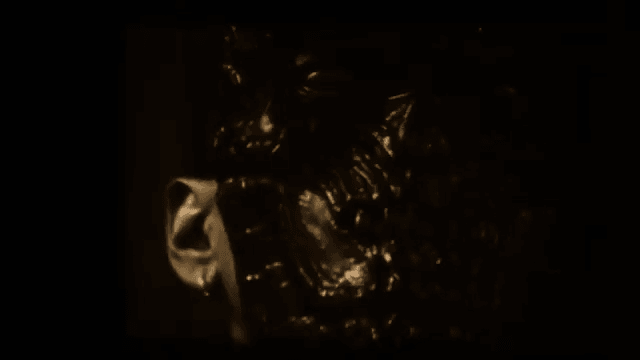
Every shot had weight because every second was material — the camera forced me to make decisions with intention.
The Film
Watch the film
Artist Statement
Reflection
The Saver's Mask is a 16mm psychological chase film about desperation, restlessness, and the frightening speed of an inner life with nowhere to land. Shot on Kodak Tri-X Reversal Film, the project became my first serious encounter with analog filmmaking: learning to read light, trust the meter, protect the exposure, and compose within the hard limits of a finite film roll. Every shot had weight because every second was material. I could not overshoot, endlessly reset, or depend on digital forgiveness. The camera forced me to make decisions with intention.
The film follows a character moving through Providence with a manic, almost ritual urgency. He runs through a courtyard, stops to touch the grass and surrounding bushes, cuts through an alleyway, and moves from one charged location to the next until he reaches a church, where he receives the Saver’s Mask. The mask, purchased from Savers, became the central emblem of the film: an object that suggests the villainous double inside the self, the evil twin we carry privately, the part of human complexity that emerges when tension becomes unbearable.
Visually, the film is built around motion, pause, and psychological pressure. The character’s body becomes the structure of the edit: running, stopping, searching, accelerating again. I was interested in how physical movement could express an internal rhythm: heart racing, thoughts spiraling, instinct taking over before meaning can catch up. Rather than treating location as background, I approached each space as part of the character’s mental state.
This project was also my first real lesson in directing. Working with an actor taught me how to communicate a feeling clearly, how to shape performance through space and movement, and how to stay open to what happens in the moment. Because 16mm gives you so little room for hesitation, collaboration becomes sharper.
Under Professor Ramón Rivera-Moret’s guidance, I began to understand cinematic space not simply as framing, but as a way of building a world. With Carter’s help bringing the film to the screen, the project became both a technical initiation and a creative awakening. It taught me that filmmaking is not only about recording a story, but about deciding what the world feels like through the camera.
For me, this film marks the beginning of a deeper commitment to cinema: to analog texture, embodied performance, psychological atmosphere, and images that feel haunted by something just beneath the surface.
Next film
Not Funny!